
DIVA TENDENCIES
from PSB ZINE V5: THE DIVA ISSUE


DIVA TENDENCIES
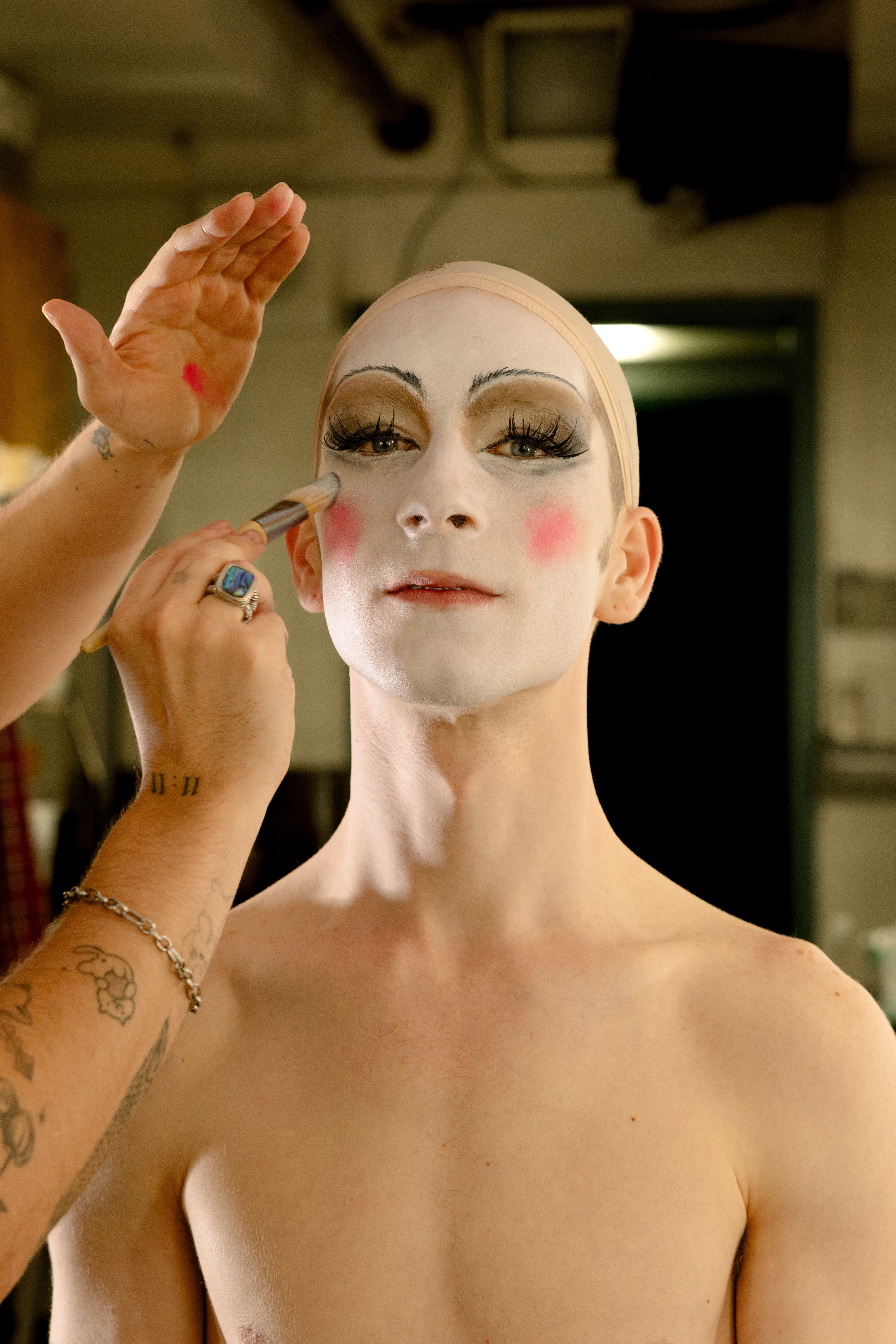
When I was four, I was obsessed with Anastasia Romanov. It started with a VHS tape of the 1997 animated film that I watched so many times the tape wore out. I’d often bring it to school to show off my most prized possession. In the school library, I found what I thought to be Anastasia’s actual diary. (It was actually Anastasia: The Last Grand Duchess, Russia, 1914 by Carolyn Meyer, one in a series of “diaries” depicting the lives of real life princesses in history.) I became fixated, checking the book right back out of the library every time it was due again. I spent hours pouring over the book, even sleeping with it under my pillow. Soon, I started to think I actually was Anastasia, in disguise after surviving her family’s assassination almost a hundred years before. To many people’s confusion, I began introducing myself as Anastasia Romanov. Like the cartoon? they’d ask me. Annoyed, I’d reply, No, like the Last Grand Duchess of Russia. The other person would look at me confused. Aren’t you a boy? Leaning in, I’d reply in a whisper, duh, I’m in disguise.
I’m interested in queer fantasies. I don’t mean the sexual kind—though sexuality certainly plays a role; no, I’m interested in the fantasy of the diva. The diva as a myth, the diva as a creation, the diva as a state of mind. The diva has long held substantial space in the minds of most queer people. Whether it be the pop divas and movie stars that we idolize, their confidence and allure a fantastical model for how to live our lives, or the diva that we each feel lies within ourselves, the entity of the diva takes up a large part of the queer psyche. If you ask any queer person what character they play on Mario, you’re likely to get the reply: Princess Peach, Princess Daisy, maybe a Yoshi. Why is that? What about Anastasia stirred my four-year-old imagination so intensely? Sure, it is a stereotype that queer people are prone to diva worship, but it is also true. Divas offer a way for queer people to express their unspeakable feelings from a young age. This tendency has, over time, become a recognizable part of queer identity. From the coded phrase ‘a friend of Judy’—a mid-century euphemism referencing Judy Garland—to the proudly declarative fandoms of ‘Lambs’ for Mariah Carey and ‘Little Monsters’ for Lady Gaga, queer culture has long embraced diva worship as both a signal and a sanctuary. These affiliations signal more than mere preference—they mark entry into a lineage of survival, kinship, and coded recognition.
For me, the diva was never just a pop star or fictional princess—she was a lifeline. Anastasia may have been my gateway, but my pantheon of personal divas quickly grew. I was enchanted by Hilary Duff as Lizzie McGuire, who showed me that awkwardness and imagination could coexist with beauty and charm. I mimicked Raven-Symoné, saying “oh, snap” because she did so on That’s So Raven, before strutting around the living room to “Strut” by The Cheetah Girls. I wanted to be a popstar like Hannah Montana—glamorous, adored, and double-living in plain sight. As I got older, my divas evolved: I swooned for the timeless elegance of Audrey Hepburn, the transformative gravitas of Meryl Streep. There was Naomi Campbell, with her imperious walk and unwavering presence; Kate Moss, with her nymph-like face, impeccably cool style, and rockstar lifestyle; and later, Madonna, whose interviews I’d pour over every morning during breakfast, desperate for an ounce of her spunk and ambition. When I couldn’t say how I felt, I could imitate a gesture, memorize a lyric, or imagine myself in a sequined gown defying the world. The diva became a model for who I might be—if not yet out loud, then at least in secret. For so many queer people, the diva is both fantasy and blueprint: she shows us how to survive, how to speak, and how to shine through the cracks. The diva is also an escape hatch from the dull monotony—or outright hostility—of everyday life. She dazzles where the world dulls, and her excess is a relief from the constraint so often imposed on queer expression. In her glamor, her voice, her spectacle, queer people find permission to imagine a life beyond the gray. She offers a kind of ecstatic refusal: to blend in, to be quiet, to diminish oneself for the sake of acceptance.

The diva didn’t begin on the radio or the runway. Her origins lie in the soaring arias and theatrical excesses of the opera stage. Classical performers like Maria Callas and Renata Tebaldi were not only celebrated for their voices but canonized for their emotional grandeur—their ability to bleed and bloom in real time. As Wayne Koestenbaum explains in The Queen’s Throat, the diva’s voice became an extension of queer longing—a sublime rupture in the norm that queer listeners could disappear into, or emerge from. Over time, the diva migrated into pop culture, transforming into a symbol both hyper-visible and mythic. From Madonna’s chameleon-like reinventions to Whitney Houston’s vocal acrobatics to Beyoncé’s embodied control, the diva adapted to the times without ever losing her core: power performed as beauty. Spencer Kornhaber puts it best: “Each diva builds off of the diva that came before her.” In doing so, she carries forward a lineage of queer projection—of being more than, louder than, and brighter than the rules would ever allow.
The relationship between queer fans and their divas is charged with a potent ambiguity—part longing, part reflection, part aspiration. Wayne Koestenbaum recalls in The Queen’s Throat once asking himself, “Did I love her? Or did I envy her?” while watching Julie Andrews dine in a restaurant. This confusion—do I want her, or do I want to be her?—echoes a broader queer question: is same-gender desire always entangled with self-identification? Eve Sedgwick, as cited by Milde, describes the childhood fixation on cultural objects whose meanings seemed “mysterious, excessive, or oblique.” These objects—whether divas, films, or gestures—became portals through which queer children glimpsed new ways of being. For many, the diva was that portal. She offered style in place of shame, control in place of chaos. In mimicking divas, queer people didn’t just escape; they rehearsed. The diva’s voice, body, and language became the blueprint queer people used to build themselves—first in fantasy, then in reality. For many queer people, listening to pop divas is more than a guilty pleasure or aesthetic preference—it is an act of survival, a ritual of emotional translation. The diva’s voice often becomes a queer person’s inner voice, articulating feelings they cannot safely express in the world. Wayne Koestenbaum writes, “Divas provide us the words—and indeed the voice—through which we are able to express our queer feelings.” This ventriloquism of desire allows queers to feel without having to name; to sing what they cannot say. Because queerness often begins in secrecy and silence, the diva offers a rare channel through which one’s buried self can echo, shimmer, and speak. In echoing a diva’s voice, queer people are not just imitating—they are building themselves, syllable by syllable. The diva becomes an instrument through which queer identity finds both resonance and range.
Much of this process is filtered through a camp lens—a queer aesthetic that embraces artifice, irony, and stylized exaggeration. While Susan Sontag famously described camp as a sensibility that converts “the serious into the frivolous,” critics like Milde argue that camp is deeply political: it is a survival mechanism in a world where queer expressions are otherwise unspoken or punished. The diva’s costumes, voice, and persona function as camp codes. Drag queens, in many ways, are the diva made manifest in queer culture. They don the hair, the gowns, the voice, and the attitude—not merely as parody, but as homage and declaration. In drag, the diva’s essence is magnified and made tactile. The diva is not just admired; she is lived. Drag queens channel her power, her poise, her defiance, and in doing so, illuminate the coded language of gender, celebrity, and survival that divas have always performed. Their acts are at once tribute and transformation, giving new life to the diva’s legacy and affirming that queer selfhood is something that can be built, rehearsed, and ultimately, performed into being.
Alongside her stands another iconic figure of queer performance: the dandy. Where the diva externalizes feeling in explosive performance, the dandy cloaks intensity in irony and elegance. Both archetypes are rooted in artifice, spectacle, and refusal to conform—queer strategies of survival in plain sight. The dandy, epitomized by figures like Oscar Wilde, performs masculinity with such stylized precision that it tips into parody, much like the diva exaggerates femininity to its grandest expression. One might think of the diva and the dandy as gendered mirrors: both are deliberate creations, aesthetic rebellions, and walking contradictions. In this way, the dandy and the diva are kindred spirits, different facets of the same resistance—the queer insistence on performing one’s self into existence. Contemporary dandies such as André Leon Talley, Billy Porter, and Jeremy O. Harris carry this legacy forward, embodying the elegance and defiance of the dandy while challenging racial and gender boundaries. The 2024 Met Gala theme, ‘The Garden of Time,’ drew heavily from the aesthetics of Black dandyism—a tradition that uses style as both celebration and resistance. These modern dandies, like their diva counterparts, are not merely fashion-forward; they are cultural strategists, wielding style as subversion and visibility as armor. In the Met’s curated fantasy of opulence and rebellion, one could see the mirrored power of the diva and the dandy: figures who demand to be seen on their own, often extravagant, terms.
This language of performance extends beyond camp and costume. Wayne Koestenbaum calls the diva’s voice “Divaspeak”—a tool for self-defense and self-assertion. But this tradition of linguistic stylization and coded performance predates the diva herself. Oscar Wilde, with his aphorisms, witticisms, and flamboyant mastery of irony, laid the groundwork for the queer use of language as both shield and spectacle. His biting epigrams were not merely clever—they were calculated, campy performances of intellect that allowed him to both conceal and reveal his queerness in a hostile society. In this way, Wilde becomes a linguistic forebear to modern queer vernaculars like ‘reading’ and ‘shade’ as developed in Black and Latinx ballroom culture. As in Wilde’s wit, these linguistic practices allow queer people—especially drag queens and femme performers—to wield language as a weapon, a dance, and a declaration of selfhood. ‘Divaspeak’ is the modern iteration of this tradition: stylized, sharp, excessive, and disarmingly honest. The gown, the glitter, the grand gestures—these are not empty symbols, but armor against a hostile culture, and the language that surrounds them is equally fortified.
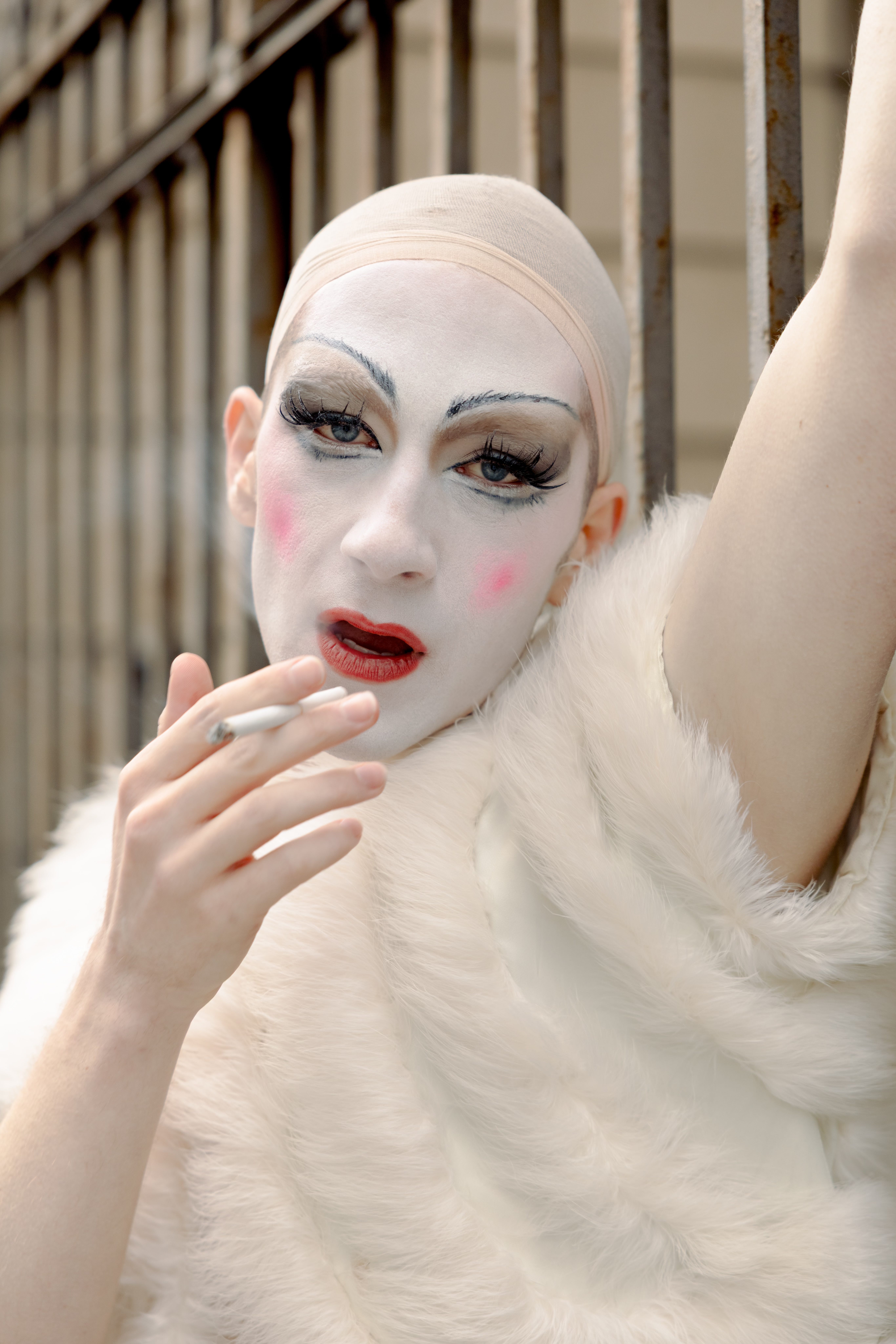
The diva is not merely a woman who performs—she is a performance that becomes woman. For trans women, and queer people more broadly, the diva offers a blueprint for transformation, not as disguise, but as revelation. In Cynthia Carr’s biography, Candy Darling: Dreamer, Icon, Superstar, Candy Darling, the trans Warhol superstar and downtown icon, perfectly embodies this ethos of diva-as-self-creation. “My business is not acting,” she once told a director. “My business is the Candy Darling business. This I built myself.” Darling’s assertion reveals a key dimension of diva-hood: the intentional crafting of persona as a mode of survival in a hostile world. She rejected roles that demanded “realism”—like a part in The White Whore—because “it was too real for her, too serious,” as playwright Tom Eyen explained. “Candy was beyond all that. She was a queen’s image of a woman to the fullest extent.” This idealized, glamorized femininity, “trapped in the forties or fifties,” was not a failure of authenticity but a declaration of sovereign identity. As Wayne Koestenbaum argues, the diva is a “continual, gratifying state of becoming,” and in that sense, Candy Darling was always already more than a woman—she was a vision of womanhood, performed in defiance of gender’s limitations. Ciera Cremin similarly notes that figures like Prince and Bowie blurred gender through stylized performance, but unlike Darling, they retained cultural legibility as men and were lauded for their spectacle rather than scrutinized for their transgression. Darling’s existence posed a direct threat to gender norms because she was her performance. Her femininity, like that of many divas and trans women, was not “fake”—it was hard-won, curated, and real in its intention. The diva, then, becomes a sacred figure for the queer and trans imagination—not for what she hides, but for what she dares to show.
The diva’s influence extends beyond the stage and into the structures of queer chosen family. In ballroom and drag culture, House Mothers and Drag Mothers lead their respective “offspring,” nurturing and mentoring younger queer individuals, many of whom are rejected by their biological families. These matriarchal figures operate as protectors, performers, and educators—roles that reflect the qualities of the diva herself. The diva, in this sense, becomes a cultural mother figure. Madonna’s pivotal role in popularizing ballroom culture through Vogue and her ongoing reverence within queer communities exemplifies this connection. Her 1991 documentary Truth or Dare showcased not only her groundbreaking Blond Ambition tour but also spotlighted her backup dancers, many of whom came directly from the New York ballroom scene. These dancers brought voguing and house culture to mainstream global audiences, and Madonna amplified their artistry by giving them a platform rooted in admiration and solidarity. In this sense, she bridged the gap between underground queer performance and pop superstardom, functioning as both icon and mentor. Often referred to as a ‘mother’ to generations of fans and performers, Madonna has, through her performance and advocacy, embraced the lineage of queer mentorship and visibility. The lineage of the queer chosen family is reminiscent of the diva’s own lineage. The elder divas’ woes and triumphs pave the way for the younger generations of divas to carry the baton in the same way that queer elders have fought for the rights that younger generations of queers now reap the benefits of.
The diva’s power lies not only in her performance, but in her resonance. She becomes both mirror and compass—a guide for becoming and belonging. But she is also a map of escape—a model for queer futurism. Through the diva’s unapologetic artifice, queer people imagine not only who they are, but who they could become in a more radiant, liberated world. This is the heart of queer fantasy: not simply surviving reality, but bending it. The diva shows us how. She conjures a world where desire is not punished, where spectacle is truth, and where the performance is the person. Whether through a Beyoncé vocal run, a Judy Garland ballad, or the glittering absurdity of selecting Princess Daisy in Mario Kart, queer people have long gravitated toward characters and voices that give shape to unspeakable feelings. These figures are not simply entertaining—they are instructive, protective, and sacred. They model exaggeration as truth, excess as honesty, and style as survival. As Koestenbaum suggests, the diva’s sentences of self-defense and self-creation do more than entertain—they “divine” us, opening us up to the possibility of becoming ourselves. For queer people, to listen to a diva is to remember who they are, or to imagine who they could be—not only in this world, but in the one they dare to dream into existence.
Works Cited
Adewole, Aanuoluwa. “Black Dandyism Blossoms at the 2024 Met Gala.” The Cut, 7 May 2024, https://www.thecut.com/2024/05/black-dandyism-2024-met-gala-fashion.html.
Madonna. Truth or Dare. Directed by Alek Keshishian, performances by Madonna, Oliver Crumes, Jose Gutierez Xtravaganza, and Luis Camacho, Miramax Films, 1991.
Carr, Cynthia. Candy Darling: Dreamer, Icon, Superstar. Pantheon Books, 2022.
Cremin, Ciera. Man Made Woman: The Dialectics of Cross-Dressing. Pluto Press, 2017.
Koestenbaum, Wayne. The Queen’s Throat: Opera, Homosexuality, and the Mystery of Desire. Da Capo Press, 2001.
Milde, Nadine. “Pop Goes the Queerness, or, (Homo) Sexuality and Its Metaphors: On the Importance of Gay Sensibilities in Postmodern Culture and Theory.” Amerikastudien / American Studies, vol. 46, no. 1, 2001, pp. 135–150. JSTOR, http://www.jstor.org/stable/41157633.
Kornhaber, Spencer. “On Divas.” The Atlantic, 2022.
You are brilliant, B! Another fantastic read
You’ve just made me understand myself so much more. Thank you